ServicesFlooring Installation
Flooring Installation in Gastonia
We install hardwood, engineered wood, tile and luxury vinyl plank in new homes and remodels. Every job starts with the subfloor and a moisture reading, so the finished floor stays flat, tight and quiet through humid summers and dry winters.
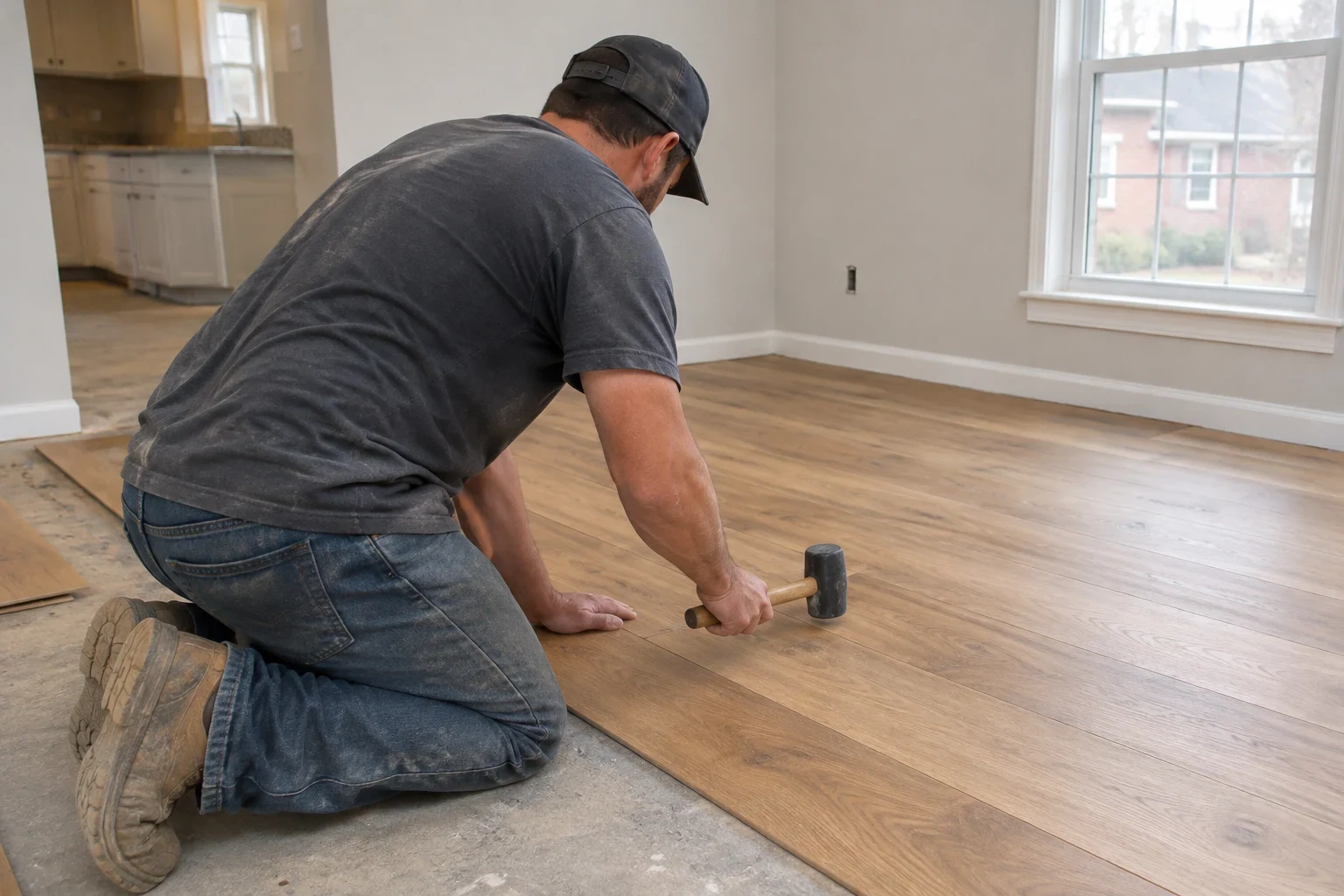
A good floor starts with what lies beneath it
Most floor trouble homeowners put up with began the day the floor went in: a subfloor nobody checked for level, boards installed straight off the truck, a slab still holding moisture. Those steps are hard to undo afterward, so we don't rush them.
Wood shifts with the air around it. In this area, a humid July and a dry, heated January can change indoor humidity enough to gap or cup boards laid at the wrong moisture content. We take readings, let the material adjust inside your house and time the install to the season, so the floor settles at the conditions you'll really live with.
It suits a new custom home, a kitchen or full-floor remodel, or one room where the old floor has worn out.
What the work includes
- Removal of the old floor
- We pull up carpet, vinyl, tile or worn hardwood, haul it away, and scrape the subfloor clean of old adhesive and staples.
- Subfloor inspection and repair
- We check for soft spots, loose sheathing and dips. Squeaks get screwed down, damaged panels get replaced, and low areas are leveled so plank and tile lie flat.
- Moisture testing
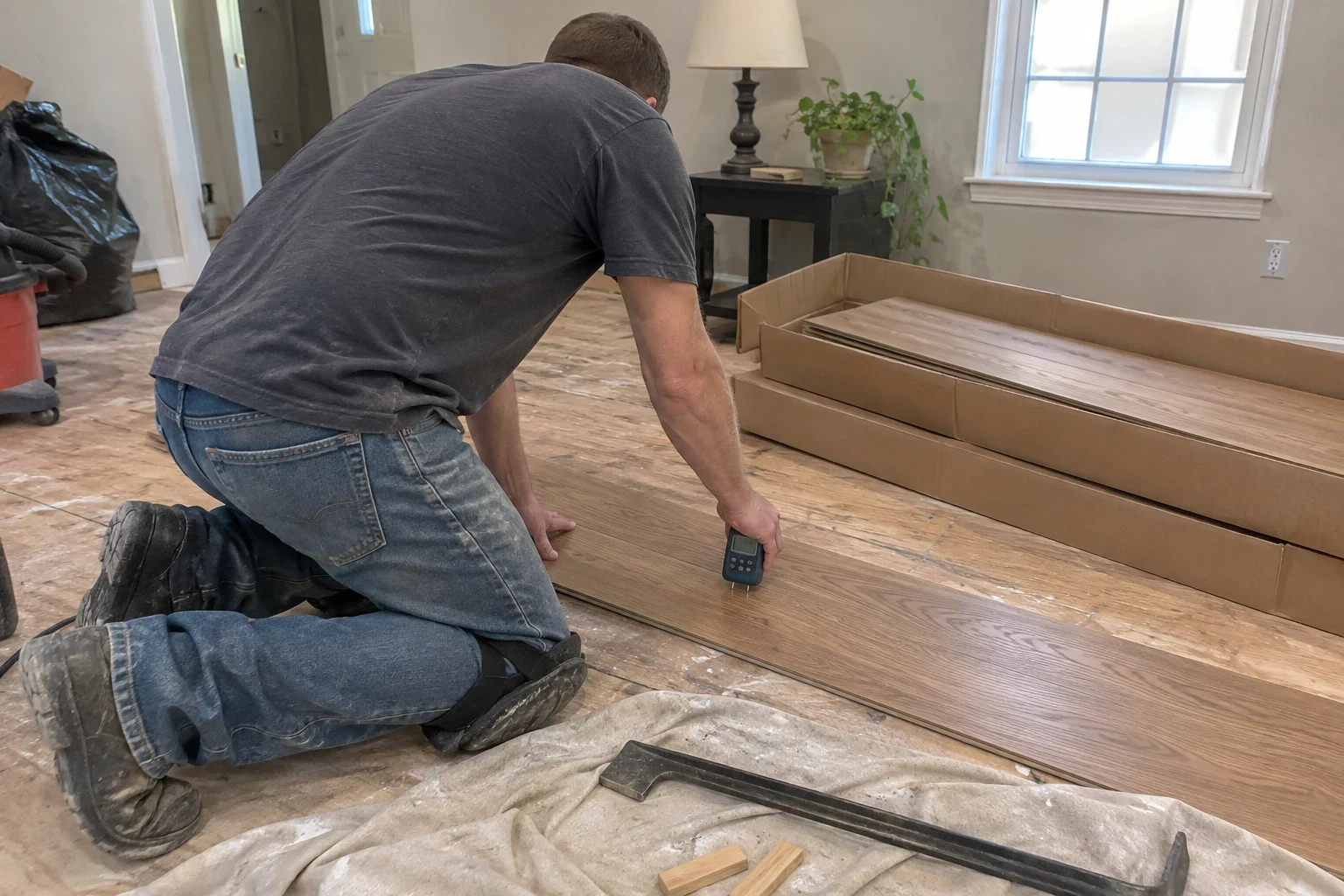
- We take readings on both the subfloor and the new material before anything goes down. Concrete slabs get tested too, since a slab that reads wet will push moisture into wood or under vinyl.
- Acclimation
- Hardwood and engineered boards rest in the rooms where they will be installed until their moisture content is close to the subfloor's. Rushing this step is the most common cause of gaps and cupping.
- Installation and finish details
- We install hardwood, engineered wood, tile and luxury vinyl plank with proper expansion space at the walls. Transitions, thresholds, stair nosing and baseboard or shoe molding are fitted so the edges look as considered as the field of the floor.
- Cleanup
- Dust is contained to the work area where we can, and we leave the rooms swept and ready for furniture.
When it's time to replace your floors
Spots that flex or feel soft
Flex underfoot usually means the subfloor is damaged or too thin. Any new floor laid over it will fail the same way unless the base gets fixed first.
Boards that cup or gap
Raised edges or seams that open each winter show the wood is responding to moisture. A repair may be all it takes, and we'll say so honestly.
Cracked tiles and crumbling grout
A row of cracked tiles frequently tracks a seam or a flexing spot in the subfloor underneath.
Finish worn down to the wood
Gray paths where people walk mean the protective finish has worn off and the wood itself is absorbing the wear.
Vinyl that peels or lifts
Lifting or curling seams generally come from slab moisture or adhesive that has given out.
Steps in a flooring project
- 1
Project consultation
We go over the rooms, how they get used and the look you're after. Then we come out to measure, inspect the subfloor and read moisture levels.
- 2
Written estimate and choosing material
Your line-item estimate covers removal, subfloor repairs, material and trim. We help you weigh choices by how they wear and cope with humidity, not just by color.
- 3
Delivery and acclimation
Wood flooring is delivered before installation and rests in the conditioned rooms. We check moisture again before we begin.
- 4
Installation
We pull up the old floor, ready the subfloor and put down the new material, leaving the rest of the house usable when the layout permits.
- 5
Walk-through
Together we look over the finished floor, check trim and transitions, and explain care for the first few weeks.
What drives the price of new flooring
Floors of equal size can carry very different prices. Material plays a part, and so does whatever turns up under the old flooring. Each piece is listed on our estimate so the costs are easy to follow.
- Room size and layout
- Open spaces move fast. Closets, angled walls, halls and lots of doorways mean more cuts and transitions.
- Flooring type
- Solid hardwood, engineered wood, tile and luxury vinyl plank vary in both material price and how long they take to install.
- State of the subfloor
- Leveling compound, new sheathing or moisture treatment on a slab adds work that must be done before the new floor is laid.
- Tear-out and stairs
- Glued flooring and old tile take more time to pull up than carpet. Stairs get measured and fitted tread by tread.
Common flooring questions
Something not covered here? (704) 753-8229
What season works best for a hardwood install?
Hardwood can be installed year-round as long as the house is conditioned and the wood has acclimated. Spring and fall are simplest because indoor humidity sits mid-range then. In summer and winter we monitor readings closely and keep the HVAC on so the boards settle at a normal moisture level.
How long should the wood acclimate?
That varies with the product and how far its moisture content sits from the subfloor's. Several days is common. We rely on meter readings, not a set number of days.
Can new flooring go on top of my current floor?
In some cases. Vinyl plank can go over a sound, flat floor, but we seldom install over old carpet or loose tile. We'll check what you have and tell you straight.
Which flooring suits a concrete slab?
Once moisture has been tested and controlled, engineered wood, tile and luxury vinyl plank all do well on slabs. Solid hardwood generally isn't a good fit straight over concrete.
How long will the rooms be off-limits?
After acclimation, one room can take a day or two. Bigger areas, tile that needs grout to cure and subfloor repairs add time, and your estimate spells out the schedule.
Which credentials do you hold?
At your project consultation we're happy to go over our credentials and how we'll plan your flooring work.
Ready to plan your new floors
Tell us about the rooms and the look you have in mind. We will measure, test the subfloor and help you choose a material that suits the way you live.