ServicesLand Clearing
Land Clearing in Gastonia
We clear wooded and overgrown lots so your build can start on solid ground. Trees, stumps and brush come out, erosion control goes in, and the work is scheduled for the drier stretches of the year so the soil stays firm and your site stays usable.
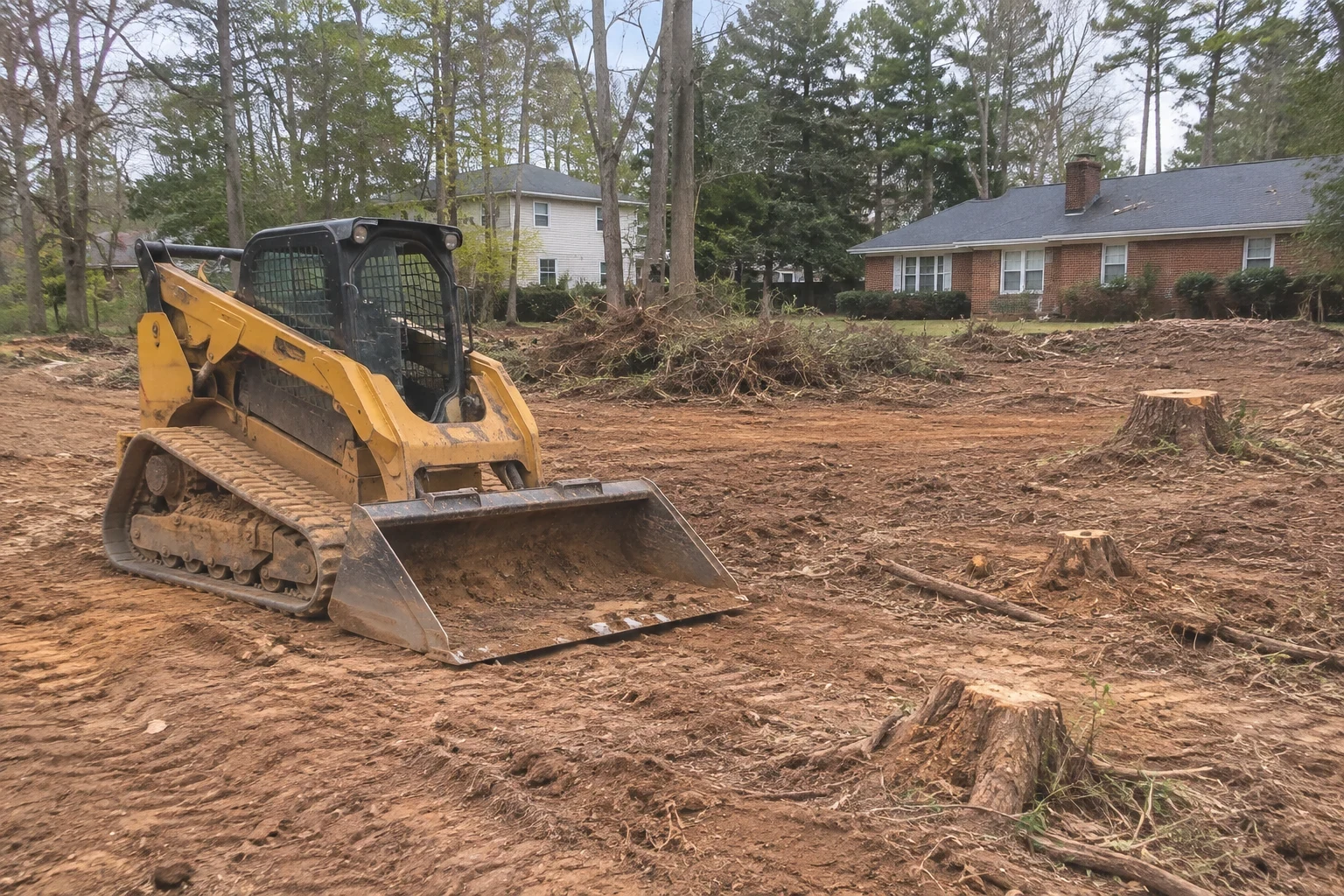
Clearing that sets up everything built after it
Land clearing is the first physical step on a new custom home, and it shapes how smoothly the rest goes. A lot cleared carelessly leaves buried roots that rot under a slab, ruts that hold water, and topsoil lost to the first hard rain. A lot cleared with the build in mind gives the grading crew and the foundation crew clean, stable ground to work from.
Timing matters as much as technique. Red clay turns slick and soft after a wet spell, and heavy equipment on saturated ground compacts and churns it. We watch the forecast and aim for firm conditions, often late summer, fall or a dry run in winter, so the site is open and stabilized before spring storms arrive.
This is the right call when you own land and are ready to build, when you plan an addition that reaches into wooded ground, or when an overgrown section of your property needs to become usable yard or driveway.
What a clearing job includes
Flagging the trees you keep
Before any machine shows up, we walk the property together and mark the trees worth saving. Older hardwoods along the edges often bring shade and value, so we fence off their roots rather than run equipment over them.
Removing trees and brush
Trees in the house footprint, driveway and work zone come down, along with vines and undergrowth. Depending on your preference, logs and brush are either hauled away or chipped.
Pulling stumps and roots
Where a house or driveway will sit, we pull stumps out with their main roots instead of grinding them at the surface. Wood left buried rots and leaves soft voids, which is the last thing a foundation should rest on.
Controlling erosion and sediment
As soil is exposed, we put in silt fence, a construction entrance and other controls. They hold dirt on your lot and out of ditches and neighboring yards in the weeks before grading and planting.
Saving the topsoil
When it is practical, we scrape off the topsoil and pile it aside, ready to spread again for lawn and planting beds after the build.
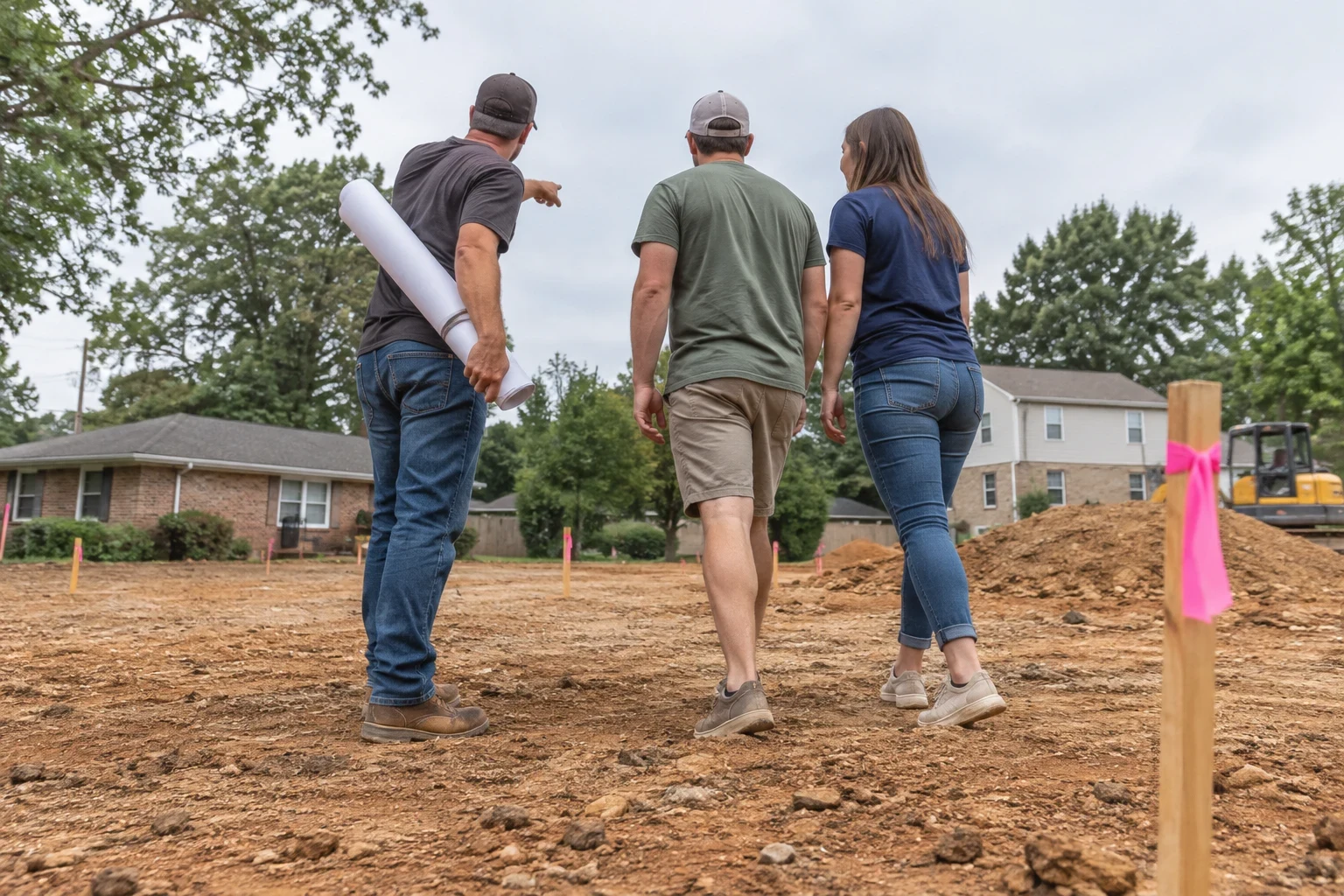
Signs your lot is ready for clearing
- You have a floor plan and a site
- Once you know roughly where the house, driveway and septic or utility lines will go, clearing can be laid out precisely instead of guessed at.
- Trees are leaning toward where you will build
- Dead, damaged or leaning trees near the planned footprint are a hazard to crews and to new framing. They are far simpler to remove before construction than after.
- Undergrowth hides the ground
- If you cannot see drainage paths, rock or low spots, the site cannot be graded or surveyed properly. Clearing reveals what the land is actually doing.
- A dry season is coming up
- If the next few months look settled, that is the window to open the ground. Waiting into a wet spring often means delays and more site repair.
- Your addition needs room
- Additions, detached garages and wider driveways frequently reach into wooded edges of a property. Clearing ahead of a remodel keeps that work on schedule.
How a clearing job runs
- 1
Site walk and consultation
We look at the lot with you, talk through where the home will sit and which trees you want to keep, and note slopes, drainage and access for equipment. You get a written scope of what will be cleared and how debris will be handled.
- 2
Permits and erosion plan
Larger areas of disturbed ground need an approved erosion control plan before work begins, and we take care of the paperwork for your project, including lots just across the state line near Clover.
- 3
Scheduling for firm ground
We set the start date around the weather so equipment works on dry, stable soil. If a long rain moves in, we would rather wait a few days than rut the site.
- 4
Clearing and stabilizing
Trees come down, stumps and roots come out, and debris leaves the site. Exposed soil is protected the same day where possible, and we leave the lot clean and ready for grading.
What shapes the cost of clearing
Every lot is different, so we price clearing after seeing the ground. The figure depends on how much comes out, how it leaves the site, and what the land needs to stay stable afterward. Your written scope lists each part so you can see where the cost comes from.
- Acreage and density
- A half-acre of thin pines is a very different job from a full acre of mature hardwoods and thick brush.
- Tree size and stump count
- Large trunks and wide root systems take more time and heavier equipment to remove completely.
- Debris disposal
- Hauling everything off costs more than chipping on site or leaving cut logs stacked for your own use.
- Slope and access
- Steep ground, soft spots and narrow entry points slow equipment and can require extra erosion control.
- Erosion control and permitting
- The size of the disturbed area determines what silt fencing, stabilization and approvals the site needs.
Land clearing questions
- What time of year is best for clearing a lot?
- Dry stretches are best, which often means late summer, fall or a settled period in winter. Firm ground keeps equipment from compacting and rutting the clay. Clearing before spring also lets erosion control settle in before the heavier storms.
- Can you save some of the trees on my property?
- Yes. We flag the trees you want to keep during the site walk and fence off their root zones. Trees too close to the foundation or driveway usually cannot be saved safely, and we will tell you plainly which ones those are.
- Do stumps really need to come out completely?
- Under a house, driveway or patio, yes. Roots left in the ground rot and leave voids that cause settling. In lawn or wooded areas away from the build, grinding is often enough, and that keeps costs down.
- What happens after the lot is cleared?
- Next comes grading to set drainage and the building pad, then foundation work. We can carry the project straight through those steps so the ground is not left exposed longer than needed.
- Will clearing cause mud to run onto the road or a neighbor's yard?
- We install silt fence and a stone construction entrance as soon as soil is exposed. Those measures hold sediment on your lot and keep the road cleaner while the site is open.

Have your lot cleared before the season changes
Share a little about your property and the home you have in mind. We will walk the land with you, go over timing and give you a plain plan for the clearing.